|
|
| Dietary Guidelines for Adult Sarcopenia (2026 Edition) by the National Health Commission: Soy protein is particularly important for muscle synthesis |
|
| Development Trends [2026/5/22] |
|
 |
| |
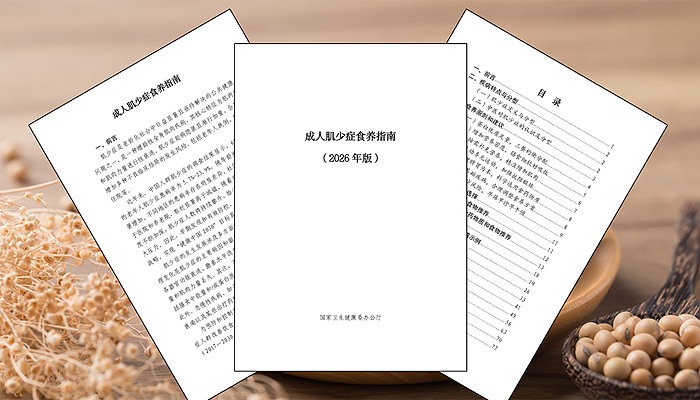
Recently, the National Health Commission organized the release of the "Dietary Guidelines for Adult Sarcopenia (2026 Edition)", emphasizing that "soy protein" is a "high-quality protein" and clarifying that "soy protein is particularly important for muscle synthesis". Suggestion: For adults with sarcopenia, the proportion of high-quality protein intake to total protein should be as high as 60% or more.
The "Guidelines" aim to prevent and control the occurrence and development of adult sarcopenia in China, and promote the improvement of dietary habits and nutritional health status among the adult sarcopenia population. Based on modern nutrition and traditional Chinese medicine theories, combined with the concepts and maintenance plans of traditional Chinese medicine, the basic principles and plans for food and nutrition for people with muscular dystrophy have been proposed. Among them, including "encouraging the consumption of high-quality protein rich foods such as soybeans and soy products", "high protein nutrient density foods are mainly... soy products", "natto and other foods are easier to digest and suitable for elderly people with weakened digestion and absorption functions", "should consume more... soybeans and soy products, and choose fermented soy products as much as possible", "whole vegetarians can supplement soy protein", etc., the "Guidelines" mention soybeans, beans and their products in many places, and recommend that people with muscular dystrophy consume "about 105g of soybeans or equivalent soy products per week". At the same time, the Guide also attached the Exchange Table of Soybean and Soybean Products Containing 5g Protein, which listed crucian carp tofu soup, shredded bean curd in cold sauce, soybean sprouts, bean curd jelly served with sauce, chicken paste tofu, soybean milk, walnut soybean milk, shredded cucumber with tofu, winter melon and edamame, etc. as the dietary recipes applicable to people with muscle deficiency.
|
|